

‘CrisisTalk’ Wins Gold at 5th Annual Signal Awards — Inaugural Season Focuses on AI and Mental Health
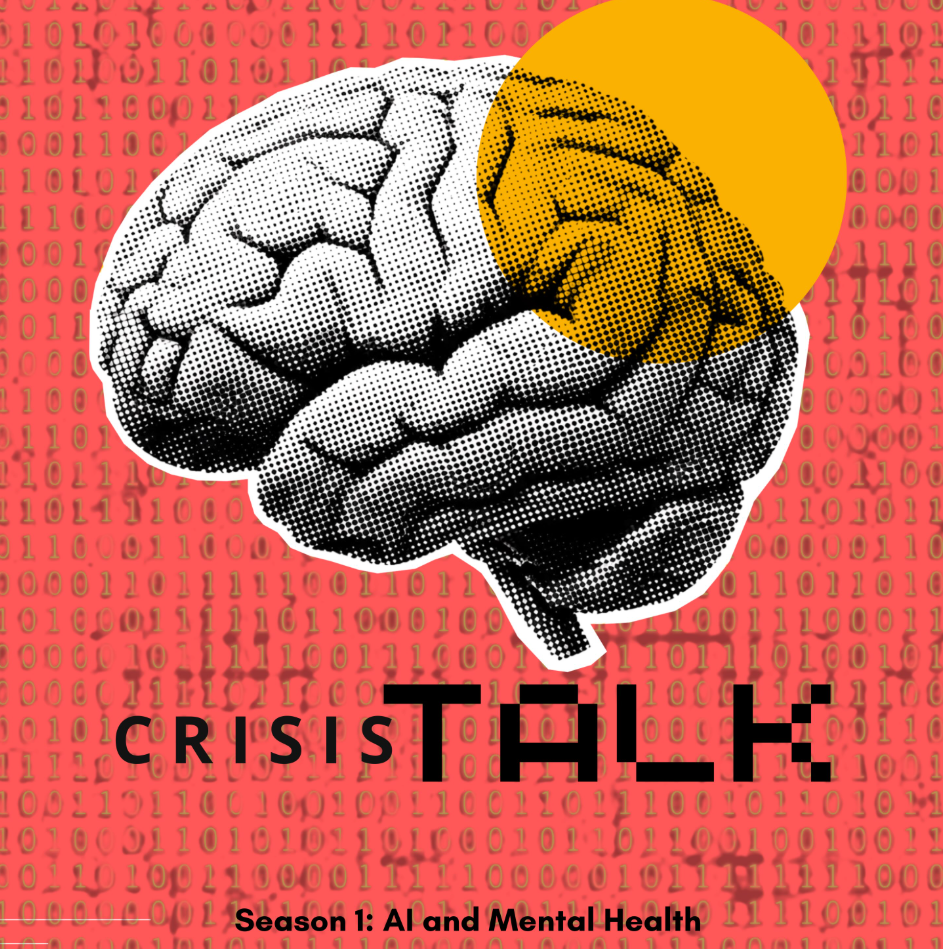
CrisisTalk
This year, Signal Awards judges focused on work that breaks format, tackles hard subjects or finds a new way to reach listeners. Jemma Rose Brown, general manager of the Signal Awards, said this year’s winners exemplify the theme: “recognizing the risk takers.”
“The podcasts…were made by people who bent formats and took bets,” Brown said in a message on the Signal Awards website when announcing the winners. “They tested ideas out loud and let their audiences in on the process. Our medium is richer because of their tenacity.”
Produced by a team of three, “CrisisTalk” has set out to narrow the gap between the rapid adoption of AI and public awareness of the risks and gains of turning to them. “Large language models are changing so fast that the public is always behind on the effects,” Hepburn said.
A KFF poll published in March found 16% of adult participants went to AI chatbots for mental health concerns, with adoption highest among those who are uninsured (30%) or ages 18 through 29 (28%). In June, RAND published a study finding that 19.2% of participants ages 12 to 21 used an AI chatbot for mental health advice, a nearly 50% jump from the prior year, with 40% turning to AI chatbots monthly or more.
“Adults and youth are turning to rapidly iterating large language models to discuss their relationships and mental health concerns, with some turning to them for friendship and companionship,” Hepburn said. “We’re exploring why that is and if and how that changes our relationship to ourselves and others — can AI chatbots, as some believe, be a bridge to care or is AI diverting us from human connection?”
“CrisisTalk” explores what happens when people confide in AI chatbots when having escalating suicidal thoughts. In the episode that is a Signal Awards finalist, “CrisisTalk” guest Laura Reiley shared that after her daughter died by suicide, her best friend found her ChatGPT log. As Sophie’s distress rose, the chatbot appeared to affirm her deteriorating perspective and used the pronoun “me” as if it were a person.
“In Sophie’s case, I think she had this idea that she had been given everything and that she had, by her own greediness, messed it all up and that people were disappointed in her,” Reiley said. “And none of that was true. None of it. But she believed that. I think that she had thought bubbles over all of our heads that were so dark and so terrible and so judgy of her, and they were just wrong.
“And I think that AI corroborated everything she thought. She would say something flagrantly untrue, and it would say, ‘Oh, Sophie, that’s so terrible to hear. That must be very hard for you,’ which is essentially saying, ‘Yeah, you’re right.’”
About “CrisisTalk”
Recovery Innovations’ “CrisisTalk” is the first-of-its-kind publication, reporting on mental health crisis care systems, including the development and launch of 988, policy gaps, system failures and the innovations helping bridge them. The publication has been cited by newspapers, journals, nonprofits and the federal government, as well as state and local governments. Hosted by editor-in-chief and executive producer Stephanie Hepburn, the “CrisisTalk” podcast launched in December 2025 and examines gaps in America’s current mental health system and the innovations trying to bridge them. The first series explores the intersection of AI and mental health.
Credits
Host and executive producer: Stephanie Hepburn
Associate producer: Rin Koenig
Audio engineer: Michael Keene
Music: Vinyl Couch by Blue Dot Sessions
*Audio engineer on episodes 1-14: Chris Mann
To learn more, visit https://talk.crisisnow.com.
About The Signal Awards
The Signal Awards recognizes the podcasts that define culture. The awards body is mission-focused on uplifting the podcast medium by recognizing the most potent, meaningful and unprecedented audio projects being made today as decided by The Signal Awards Judging Academy.
Stephanie Hepburn
CrisisTalk
editor@crisisnow.com
Visit us on social media:
LinkedIn
Instagram
Legal Disclaimer:
EIN Presswire provides this news content "as is" without warranty of any kind. We do not accept any responsibility or liability for the accuracy, content, images, videos, licenses, completeness, legality, or reliability of the information contained in this article. If you have any complaints or copyright issues related to this article, kindly contact the author above.
